Yes, the title is real. No, it is not clickbait. I am in the process of moving to Linux. I am testing a couple of distributions in a virtual machine and, as I type this, this article is being written from Firefox running in Linux through Windows 11.
So why the change?
The simple answer is that I have become increasingly frustrated with the direction Windows has been heading over the past few years. It feels like Microsoft is making more and more decisions for me instead of letting me decide how I want my own computer to work.
So we all knew Windows has been spying on us. But it is actually worse than you actually think with GDID. Whether you agree with Microsoft or not, reports and court proceedings concerning Microsoft's telemetry and device identification capabilities have further eroded my trust in the company. Those reports were one of the factors that influenced my decision to move to Linux.
I am also sick all the adverts as well A.I and MS Copolit app popping up everywhere, after every update. You can disable a few services but after every update you have to reset all your settings again. I find it very intrusive, annoying, and frankly I have had enough of the big corporations from Adobe, CorelDRAW, and Microsoft even Apple with the way they act and force crap on their users... well I am now saying no more and I have simply lost the little amount of trust I had in these companies (which was basically none in the first place).
I have used Windows for decades, basically since Windows 3.0 and it has served me well, but I have always kept one eye on Linux since its inception. I first looked at it back in the late 1990s and early 2000s. Back then it wasn't quite ready for the way I worked, although I have continued to experiment with it from time to time ever since.
Today things are very very different.
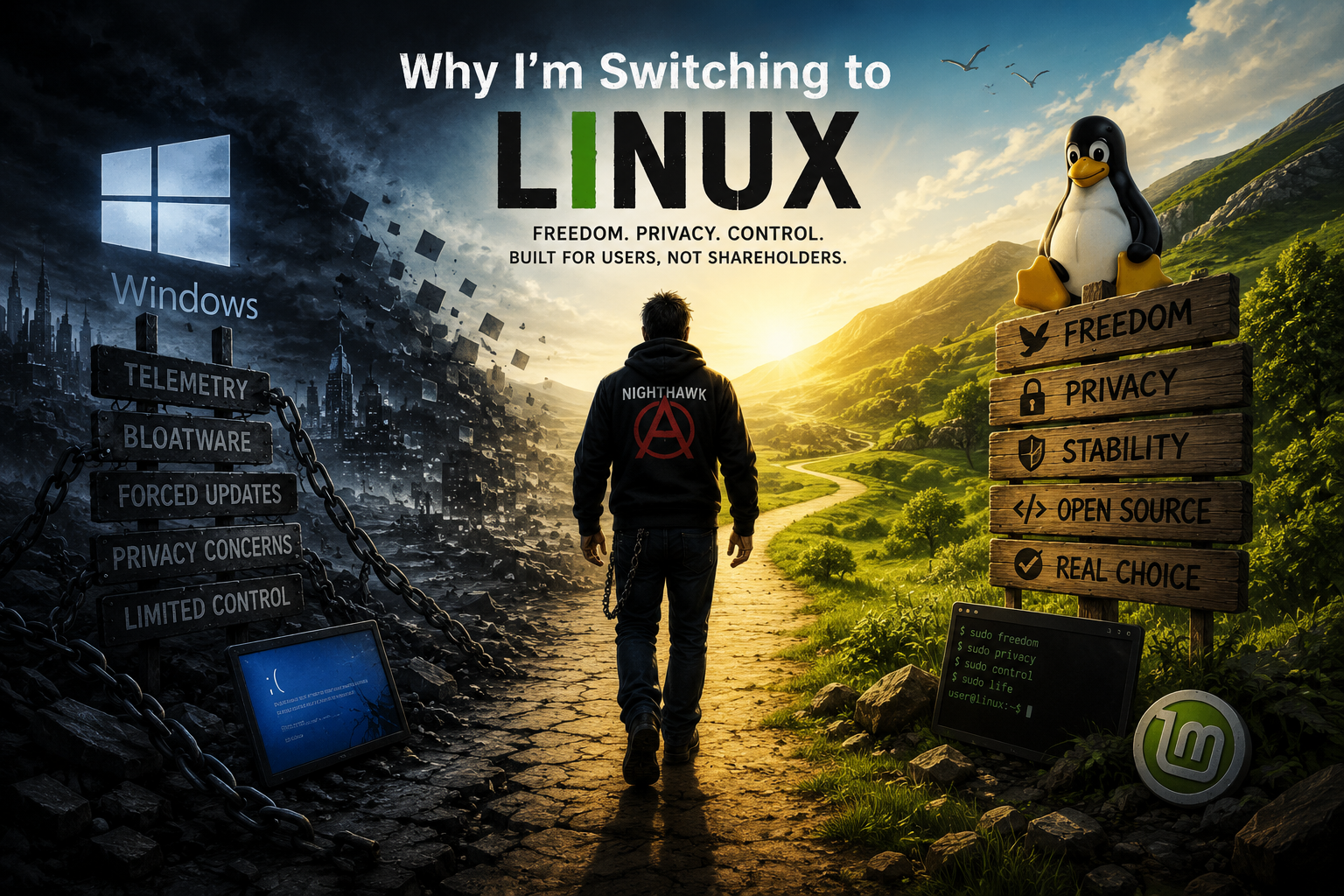
Modern Linux distributions are polished, easy to install, and support a huge range of hardware out of the box. There is plenty of software available, and for most of what I do day to day, Linux can now comfortably replace Windows.
That doesn't mean I am blindly jumping ship.
I believe I am taking a sensible approach by testing everything first in a virtual machine. If I can't make my software work the way I need it to, then I simply won't move. Once I am happy everything works, then I will build a dedicated Linux system.
READ MORE
After trying a few desktop environments, I have settled on Linux Mint with the KDE Plasma desktop. It offers the flexibility I like while still feeling familiar enough to continue being productive enough. (however there is no wrong distribution as they are all Linux and configurable at the end of the day.)
Will I completely abandon Windows?
Hard to answer as a straight yes nor no answer, but probably not.
There are still a few specialist programs I use, particularly around graphics and music production, that are simply better on Windows. I have no intention of changing operating systems just for the sake of it. My philosophy has always been:
"If it ain't broke, don't fix it."
My problem is though while it isn't broken as such it is increasingly spying, forcefully bloating with AI and other non essentials.
If a particular application genuinely works better under Windows, then I will continue to use Windows for that task. However my Windows system will not be connected to the internet in any form, so I will be turning off WiFi and disconnecting the ethernet cable etc... any up dates will only be for the apps I trust done via thumb drive etc... Windows Applications I will be keeping are ie; FileMaker 19, FL Studio, Affinity and VLC are probably the only apps I will be using on the Windows system.
That being said, if I can actually get these apps to work on Linux 100% with out any lag, without issues and all plugin's just work then there is a huge possibility Windows as my actual main OS will become the way of the Dodo bird. I may also reinstall an older version on windows just to run those 3 application (mainly my music).
So my day to day browsing of the internet, social media, emails, banking, shopping (basically anything done online) writing any documents, basic graphics and designs and any basic video editing will all be done on Linux.
The goal isn't to become a Linux fanatic. That being said I am starting to hate Microsoft and Windows.
The goal is simply to use the best tool for the job while regaining more control over my own computer.
This is likely to be a gradual journey rather than an overnight switch, and I'll share both the successes and the frustrations along the way.
Planned systems
My systems will be something like the following;
- Windows 11
- FL Studio - Music Production. (FL Studio and plugins)
- FileMaker 19 - Database Production & Maintenance.
- Affinity - More complex graphic designs. (very limited as I will mainly use InkScape)
If I can get any of these apps to work 100% on Linux then they will be moved over to Linux.
- Linux Mint - KDE Plasma
- LibreOffice - General Document creation and basic graphics design.
- Scribus - Desktop Publishing.
- Inkscape - Vector editing. Most Designs.
- GiMP - Rastor and photo editing.
- Krita - Rastor and photo editing/drawing.
- Audicaity - Audio recording.
- Thunderbird. (email)
- FireFox Browser.
- FileZillia. FTP
- Kdenlive - Basic Video Editing.
- DaVinci Resolve - Series complex video editing.
- Experimenting.
- Between LibreOffice, InkScape I have been able to access my older CorelDRAW files with only minor *hicups* and most of the time fonts because I have forgotten to switch file to curves/paths
This change is not going to happen overnight, but it will happen.
I am not going to rush out, wipe my current system, and hope everything works. That is not how I approach technology. I have too many important files, projects, applications, and workflows that I rely on. What I am hoping is that I will use Linux more and more as I get use to in and find applications that can fully replace what I use on Windows... but I know the main one FL Studio is probably not.
The first step is testing Linux properly and learning what works and what does not. The next step will be building a dedicated Linux machine, most likely a small form factor mini PC, once I have saved enough money for the right hardware. So no dual boot. I will then invest in a Dual monitor, dual PC KMV switch and go about my daily business.
This gives me the ability to slowly transition without disrupting my current workflow. Windows will remain available for the applications that still require it, while Linux will gradually become my main everyday operating system.
Why no Dual Boot?
I have dabbled with that in the past, and when something goes wrong it can go horribly wrong so I am eliminating that possiblity. Also when Windows autodated it totally ruined GRUB BootLoader and I had to reinstall it twice before I said Windows you suck (again)
The goal is not to make a dramatic overnight change. The goal is to make a sensible long-term move. But my plan is to use MS Windows less and less especially Windows 11, Co Pilot and ad its bloatware spyware...